Labels

Showing posts with label Production Research. Show all posts

Monday, 17 February 2014

BFI - Youth, Media and Collective Identity


http://www.bfi.org.uk/


On Wednesday the 5th of February my media class visited the BFI to experience and learn about the way media portrays young people and their culture. We viewed a presentation performed by Matthew Hall and he spoke about how teenagers begin to build up their identity, he also spoke about the Psychoanalytic film theory in which we use films and television that we watch in order to reinforce our own identity. Whilst at the presentation we were asked to analyse a variety of film clips and decide on what dominant message was being sent about the younger characters. We were also asked to think about  the oppositional interpretation and how adults may view the clips differently.
One of the pieces we were shown was a clip taken from the film The Wild One. In the this clip we see a group of people who are of the same age, the characters we all male and were shown wearing similar outfits. This film was made in 1953 and shows a good representation of a gang of people acting as one. This gang like behaviour is a trend in other youth drama films such as Quadrophenia and Bullet Boy. It begins to show that young people group together and identify with each other, this is demonstrated through the similar outfits and hair styles. This comradary with in the group can be seen as desirable to younger audience as it shows a good sense of belonging although when linked to violence and delinquency it can be viewed as a negative and threatening way to act by a audience of older viewers. This gang like behaviour may also play on the fears that parents may have about their own children acting in this way.


Another piece that we were shown was a clip from the film Quadrophenia. In this clip we see the youth subculture, the mods rival with another subculture, the rockers. This clip also demonstrates the gang like grouping of the characters who also behave in a delinquent and obstructive way. Then dominant message this clip shows the characters sticking together, working as one and acting in a collective way even though the way they are acting is destructive and violent. Further in the film we are shown parents and they come across idle and disinterested in their children, this could imply that they are to blame for the sub cultures. It may be more of the fact that teenagers want to be different from their parents and they achieve this by acting in a gang of people they identify with and this may relate to the audience who is younger and feels the same way about wanting to be different, even though they may achieve this through not being violent and destructive. Viewers of an older age may also identify with this film as it may cause them to become nostalgic about how they felt when the were younger.
Another film that showed idle parents was 'Kidlulthood'. They parents are show to be wrapped up in their own problems and from this the fail to notice the trouble that their daughter is going through, young people may relate to this as they feel that their parents do not understand them. 'Rebel with out a Cause' also shows the more emotional side of a conflicted teenager and again the parents seen to be unaware of how unaware they are in regards of their sons feelings. Adults watching this could feel that they never act in such a dismissive way but it could also cause them to feel worried about if they are and not realising they are doing so.


This scene of Kidulthood touches on many still current issues that cause frequent discussions in news and media such a under age drinking, teen pregnancy and bullying. It begins to show that the teenage life is not all care free and little responsibility as many parents see it to be, as well as gang violence and drug taking the film as shows the pressures that a young person may face in their life, although when reflected to reality in may not be such an intense representation.

One issue that is often up for discussion is the fear that films of this nature are the reasons for gang violence, drug taking and general delinquent behaviour. I disagree as if you are going to blame a gang film for gangs you must question a horror film for horrific murders and in the same way a heist film for robberies. A film that explores this questionable impressionability is 'Human Traffic'. In a ironic fashion is shows how films are not to blame for a young persons blameable behaviours.

Overall the day help us to explore the way that we interpret media  and how it portrays youth and collective identities. Also we learnt to think how an older audience may view them and that not every representation is an accurate one.


Thursday, 5 December 2013

Establishing Audience

With in media it is important for me to know who my target audience is and who I am aiming my product at. This can help when it comes to marketing but I will also benefit me when thinking about potential characters or any references I may want to include in my piece.

When thinking about what age classification my production will be it is likely that it will be a 15 age rating as this allows for frequent strong language, dangerous behaviors and moderate violence. However, the opening sequence alone does not meet the 15 criteria as it doesn't involve violence or bad language use.
Our production as a whole would have the age restriction of fifteen but this is not able identify specific details of who we think our audience would be.

Whilst planning and sharing ideas about what we think our opening sequence should include my group and I decided on one main protagonist as the lead who would be female. Female audiences watching our piece could identify them selves with our main character but we do not watch to alienate the potential male audience for our product. I do not think deciding to have a female lead would make male viewers turn away from my product as the story is not dominated by a single sex which is able to make it appeal to both.

Continue with our chosen character her age in the piece will be around 19, having her be fairly young could make our product appeal to people who are late teenagers and young adults as they would be able to relate to the main character.

The characteristics of our main character should not completely define and speak for all of our potential audience as they may be people who are older than a young adult who are interested in the story line of our production.

I feel that it's most important for our audience to be of people who enjoy the watching the genre of a drama-mystery film and consist of people who appreciate and detailed and twisting story line. Having those people as our target audience will benefit our production as they will be able to realize the meanings of our story and sustain an interest.

Monday, 2 December 2013

Conventions of an Opening Sequence - Drama-mystery

Now that my group and I have successfully agreed on what genre of opening sequence we wanted to produce we are now able to watch existing products in order to identify and establish the conventions of a drama mystery opening sequence.

To begin I look into several films that fitted our genre including Premonition, The Forgotten, Black Swan, Se7en, The Girl with the Dragon Tattoo and Donnie Darko. Using these films as a source was a good place to start as they provided me with a good indication of what we could include when planning our final production.


Above is the opening of the film 'Se7en' which is an example of a successful mystery film. From watching this i was aware of how titles we incorporated in to the scene. I liked the way the font of the text was able to help emphasize the tone of the film along with how they jumped around on the screen, when thinking about my own production I would also like to have a text that represents the plot of our story. The coloring in this opening is very shadowy and has dim lighting which again helps to set the tone. The visuals show are mostly extreme close ups and the objects shown are able to for shadow the rest of the story which a convention of most other opening sequences. The extreme close ups only allows the audience to see small areas of the objects which can leave them feel intriguing of what the full picture will be.

From this I have learnt that the lighting also plays a big part in the opening sequence which I was not as aware of before. The use of titles are also important as they help to create the desired atmosphere for the viewer and having a font that does not fit the genre or story could break the desired tone.

 One of the other openings that I found interesting was the opening sequence to the film 'Black Swan'. The sequence is very simplistic but still has a powerful impact, what intrigued me most about the opening was the pace of the scene and how the music effects this.
The begging starts very gently as she draws the line and the music starts very calm and rhythmic. As the sequence progresses the drawing becomes quick and more erratic as this is complemented from the music picking up in tempo and strength, this could also be applied to the film as it starts with an ordinary girl but through at the film her life intensifies and eventually becomes hard to control.

When watching this I liked the idea of starting my opening sequence very softly with an ordinary situation and have it progress in to something bigger and more intriguing and I feel choosing a appropriate sound track is crucial to being able to achieve this.

Overall from carrying out this research I was able to identify several conventions that are most suited to a drama-mystery, one of these would be using props and scenario which are able to drop subtle hints to audience and foreshadow the story with out giving to much away. The correct use of titles is also important as using the correct font can help fit the genre. The soundtrack used in drama-mysteries are rarely upbeat so I feel the one I choose to use should be more serious and emotional.

Now that I have happily identified genre and convention I will be able to apply it to my own opening sequence, next I will establish who my target audience might be.

Sunday, 17 November 2013

Conventions of an Opening Sequence

Now that I have received the brief for my final task I think that it is important that I am able analyse it in order know what I need to do. Part of this analyses is to be able to identify the conventions of an opening sequence.
From watching opening sequences in class I have found that they often include the titles of the actors involved, the director, the media institution and producer as well as the name of the film. These titles are usually subtle and can be incorporated in to the action of the scene, however sometimes the titles can be shown in a very obvious way. Depending on the film some opening sequences are more cinematic than others.
Other things I noticed from watching various opening sequences is that they often contain small hints and metaphors of what the film is going to contain. I like the idea of putting hints in to my opening sequences but it is important that I do not give too much away as the opening to a film is ideally meant to draw you in and leave you wanting more. Some opening sequences also include the films soundtrack or some form of music.
Here are two film openings I have previously looked at.

These openings are very different but both of the start with the institutions name, the title of the film appears at the start of 'the devil wears prada' and at the the end of 'children of men' which leaves you with a different feeling when entering the film.

Now that I have identified the basic conventions of an opening sequence my group and I will need to decide what genre we want our opening sequence to be and then identify the conventions of that particular genre.


Saturday, 16 November 2013

Art of the Title


Now that I have analysed the brief I can begin to start thinking of potential ideas that could be good for me to include within my final product.

 'Art of the Title' is a good website as it allows me to view many different openings to films of varied genres. This is helpful as it helps with creativity and is a good way of getting me thinking. Art of the title also provides me with a means of identifying different conventions amongst different genres, this will help when I come to choose my own genre I want to use for my opening sequence.

Tuesday, 15 October 2013

Technical Sound

In my previous post I spoke about sound as a whole and the affects it has and audiences emotions, but here I am going to touch on sound from a technical aspect.
With in media there is diegetic and non-diegetic sound. Diegetic sound refers to the sound that the viewer can see the source of, for example a phone ringing or actors talking. Non-diegetic sound is the term used to describe the sound that has been added in post production. The two are combine to create the most appropriate sound for the scene.
Certain technical sound techniques can be used to add to the dynamic of a scene such as asynchronous sound. This type of sound is where the audio is deliberately matched out of sync with the visual, it can help to create the feeling of chaos and confusion. Asynchronous sound can also be used to describe unfitting music, for example a violent fight paced with calming classical music.
Voice overs are often used within media, a voice over is when the audience is receiving information which is usually given from the main character. They are a good way to fill in holes of the story with out breaking continuity.
Sound motifs are sound that is played for a particular character. It can be used to help enforce the presence of a character, sound motifs can be subtle which helps create a familiar feeling with the audience or they can be more obvious for example a sinister sound when the 'bad guy' appears.

Some other technical aspects of sound include ambient sound, this is sounds that the audience hear from the back ground such as traffic from the city or birds tweeting. Sound bridges are also used, this is where sound continues over cuts of editing. This may be a voice over or music on the radio in the characters homes.


Here is an example of a voice over from 'American Psycho'. Having the introduction to Bateman's life style from the character allows the audience to become immersed in and understand more about him, if the scene did not have the voice over the audience wouldn't understand Batemen's mind when entering the rest of the film which could effect how he is persevered early on.

Having a better knowledge of technical sound will benefit me when it comes to produce my final piece.

Friday, 20 September 2013

The Importance of Story Board and Scripting

In order to be able to being filming some preparations and planning must take place before hand. One of part of this preparations is storyboarding and scripting. Having a script is helpful as it is able to provide the actors with direction and ensure scene are carefully planned out. With out scene planning it can be easy to lose track of what needs to be completed with in that particular scene, this can cause the group to be off schedule. Not having a clear script and plan of what is being filmed could effect the narrative and the overall tone of the final production, this may lead to the production be hard to follow or having key scenes missing.

Story boards are an extension of the scripts and are the ideas of the production be made in to a visual form. Story boards are a good way of helping the people involved visualize how the scene is going to unfold, it can also give actors a focus of where they need to be and the camera workers an idea of what shots they are trying to film. With out the use of story boards it may be hard to establish when the desired shots have been achieved and having visual is a good focal point as ones ideas may be very different when compared to those of an another member in the group.
Here is a good example of a story board as it specifies what type of shot is required and details of the scene.

From this information about scripting and story boards I will apply it to my own planning when it comes to filming my own scenes. When working as part of a group it is important that all of us our are the same page and are working towards the same goals.

Wednesday, 18 September 2013

Camera Movement

I have started to learn about different camera movements and the effect they create with in a scene. There are varies types of camera movements such as panning, a crab movement which can be to the left or to the right, there's tracking in and out as well as tilting up and down.
A pan shot refers to the movement where the camera follows at the same pace as the moving actor or object, this can be done in a swivel motion. It helps the audience to feel a if they are moving with the character.
A crab shot is where the camera moves left or right to reveal more of the scene.
A Tracking shot is where the camera is moved smoothly away or towards the subject, it bring the viewer closer and draws them in to the scene and relationship between characters.
A tilt shot is where the camera moves up or down from a fixed point, it help show perspective or help reveal something slowly.
Here are some examples.
Tilt Up
Tracking Shot 


Next we will begin to film are own short scene and try out some camera shots and movement.

Friday, 13 September 2013

Mise-en-scene

With in media it is important that I am able to understand and accurately interpret media texts. Expanding my knowledge of film langue will help me do this and will also benefit me when it come to film my own media products. One part of film langue that I have recently studied is the use of Mise-en-scene. Mise-en-scene is the visuals that make up the frame, it includes everything that is shown on the screen including background and foreground.
One area the Mise-en-scene covers are costumes, this includes hair and make up as well as the outfits that the character is wearing. costume is a good way to show what time period the text is set in and it can also outline what sort of status the character may have. For example if a female character was wearing an smart and expensive dress with neat hair it would add to her authority and make her seem more important.

Lighting is also a part of Mise-en-scene. Having a dark setting will have a different effect on the audience when compared to a bright setting, light also refers to how characters with in the scene are lit. For example is a character was shown in the shadows it may be referring to certain aspects of the personality such as non trustworthy or that they have something to hide. When compare the dark washed out colouring and the bright vibrant lighting of the two images they are able to create very different feelings and tones.
Another area of Mise-en-scene is actors, this are includes how the actors are positioned and how they used there facial expressions with in a scene. All of this will help to build their character and showcase them to the audience. Body language is a good way to identify relationships and how the character is truly feeling and this may help the audience identify key information. A example of body language is shown is the screen shot from 'What Happens in Vegas' for it you can clearly see that there is some tension between the two characters shown.
'Children of Men'
Props also play a part amongst Mise-en-scene as certain props have certain connotations. For example a character holding a bunch of flowers would give a different message to the audience when compared to if the character was holding a gun.
'What Happens is Vegas'
                                                                            Setting is also relevant within Mise-en-scene as it as able to provide the audience with information of where the text is set. The setting will also have different connotations depending where it is. For example the screen shot from 'Children of Men' shows run down city which helps add to the dystopian tone of the whole film.


Overall the use of Mise-en-scene is very important in media as each aspect of t it is able give the scene meaning and influence the audiences feelings. Effective Mise-en-scene is able to communicate key details to the audience about what is happening, this can be done subtlety or it can be more obvious.

Thursday, 12 September 2013

Camera Shots and Angles

Camera shots are important part of film as they help tell the story and lets the audience know how characters are feeling as well as being a important part of the overall narrative.
Camera shots:
ECU - Extreme Close Up - intense emotion.
BCU - Big Close Up - emotion.
CU - Close Up - further away.
MCU - Medium Close Up - Head and shoulders.
MS - Medium Shot - conversation.
MLS - Medium Long Shot - charters and environment around them
LS - Long Shot -more of the surroundings
ES - Establishing Shot -  where the film takes place
HA - High Angle Shot - vulnerable
LA - Low Angle Shot -  powerful
BEV - Birds Eye View - Shot from directly above
DA - Dutch Angle - suggest something is not right
EL - Eye Level Shot - Camera is at eye level capturing mainly face and shoulders
RA - Reverse Angle Shot - Series of two shots showing what the person is seeing

 There are a wide variety of different camera shots used and I will be focusing on 5 of them.
'I Am Legend'

This is a establishing shot, this type of shot can be at the start of this film or when the location had changed. It  lets the audience know where the film or scene is taking place and the type of environment the characters will be in. This shot show a abandoned New York, you can guess its New York from the landscape and buildings, the lonely city which is usually filled with life gives a good premise of the upcoming film.

'America Psycho'
This is a medium long shot and its show the characters body language and actions rather than emotions. This shot shows Patrick contemplating and toying with idea of nail gunning Jean but we also get to see Jean and how unaware she is. These shots are a good way of seeing what the characters are doing as well as getting in dialogue and showing relations between characters.


'The Dark Knight'
This is a Dutch angle shot and the twisted background helps to show that there is something not quite right or sinister about the character in the foreground. The Jokers appearance is unmissable and when paired with the angled background it gives a menacing feel.


'Finding Nemo'
This image shows a low angle shot, this type of shot give the impression of power and dominance. Here the shot is looking up at the shark, Bruce. Because we are looking up a Bruce it help the audience get a idea of how much bigger he is in comparison to Dory and Marlin and show he is a sinister character. 


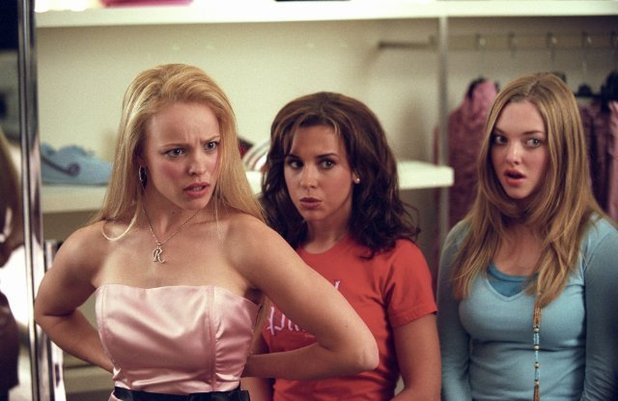
'Mean girls' Regina, Gretchen, Karen
This show a medium shot from the film mean girls, this shot allows to capture the general emotion from more than one character at a time. From the shot you can also understand who the main character is from the three girls, although Gretchen is in the middle the audiences eye is drawn to Regina because she is slightly closer to the front and looks angry rather than concerned as the other to do.

Short Clip - Camera shot analysis

In Class today we watched a clip from 'King Arthur' we looked different camera shots and analysed why they were put in and the effect they had on the narrative of the story. This clip had a many different camera shots such as establishing shots to help identify the setting and show the icy ground which played a big part in the scene. There were close ups so the audience could get a feel for the characters emotion as well as know who the main characters were. Watching this clip helped us to know what to look for during a scene in relation to camera shots. After we watched this clip we were asked to choose a clip of our own and analyse the different camera shots used.

I decided to choose a clip from Insidious. With in the clip there wasn't a wide range a shots used but the camera shots used made a creepy and uneasy scene and created a good narrative to a uncertain situation and as a horror film the shots are there to draw you in.
The first shot I decided to look at was a medium shot which helped to establish his surroundings and the type of environment he was in. It showed the smiling family in a typical family scenario, also it showed that Josh (the male character) was curious and weary of the family. As Josh becomes more intrigued the camera shot changes into a medium close up as he inspects one of the family members.The close ups are prolonged which helps to build the tension as the audience is expecting something to happen but the girl stays motion less. There is another close up where he inspects the mother figure and the and this close up gives you a good view of Josh's expression which helps you get a feel for what Josh is thinking and although he doesn't look scared as such his confusion is well translate to the audience. Further in after Josh hears the gunshots there is a close up of the doll like girl this shows her deranged look and makes the scene feel even more uneasy than it already was. Close to the end on the clip there is a reverse angle shot which begins show Josh looking around and then we see him looked horrified really for the first time during the scene, the camera then switches allowing us to see what he has scene and the family are right there behind him.

From this task I began gaining skill in how to analyse film language and regognise effects that certain shots will have the audience. These skills will help me when I start to plan and film my own media products. 

Saturday, 7 September 2013

Get Carter car park scene


During my lesson today I was introduced to the short scene from 'Get Carter' I had not seen the film so it was a good opportunity to practice my analyses and interpretation.
At the start of the clip we are introduced into three male characters and instantly we are aware of who is the main character is in comparison to the other two. The two men on the right are in the background and are wearing suits of the same colour. The man on the left seems isolated and closer to the audience and although he is wearing a similar suite it is different in colour which makes him stand out and could suggest importance. We soon find out that the male in the grey suite is the dominant of the three as he throws his cup to the floor in a assertive manner. The other two me do not really react and that's the last we see of them. The shot is now focusing on the male in the grey as he crosses a bridge. In the bottom left you can see a male figure standing in the shadows and walking as other man walks. This detail could be missed but it's there for a reason as the shadows imply that the figure could be more of a darker character. Now this new character comes in to play, on seeing him the man in the grey suite calls out 'Jack' so the audience knows that they are aware of who each other are. The man's body language also changes when he sees Jack, he goes from powerful strides to becoming submissive and arching his shoulders back and this builds up the anticipation of something happing along knowing that they are high up, and soon enough he gets punched in the stomach. After their fight the authority and dominance of the man in the grey suite is passed to Jack and this allows the audience to recognise that Jack is the main character and not to be messed with.